
Why Do We Do Shotokan Karate – What Are We Looking For?
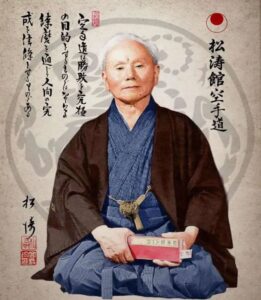
Across the world, millions of people step into dojos, spaces defined not by comfort, but by discipline. Dressed in simple white uniforms, they embrace a kind of hardship most would avoid. Two or three times a week, we do the same at Kokoro Shotokan Karate, striving to stay true to the legacy of its founder, Gichin Funakoshi.
Shotokan practitioners come from every background imaginable. They are not united by ideology and rarely agree on much except for one thing: karate-do is a way of life. Their practice is rooted in simplicity; plain uniforms, minimal display, and a quiet rejection of ego. In today’s world, that ideal is not always easy to uphold, and not every student fully realises Funakoshi’s lesson.
Even so, the principle remains: rank is worn lightly; effort is what truly matters.
Training is repetitive, demanding, and deeply intentional. Students are taught to “move from center” and to pursue ikken hisatsu – a decisive, focused action grounded in precision rather than flash. True mastery is not found in dramatic techniques, but in strength developed patiently, over years of consistent practice.
Shotokan is also deeply tied to tradition. Practitioners see themselves as part of a lineage tracing back to Funakoshi, the man who introduced karate to Japan. His philosophy emphasised balance: learn from tradition, challenge it, and ultimately transcend it. Growth is essential, but it must remain connected to its roots.
Funakoshi’s own life reflected this balance. Born in Okinawa in 1868 during a time of great change, he was physically frail but intellectually nurtured. His journey in karate was never just about strength, but about character. He transformed karate into a global discipline grounded in humility, perseverance, and self-mastery.
At its core, Shotokan asks a difficult question: how do you become stronger, not just physically, but as a person? The answer lies in discipline, repetition, and a willingness to embrace challenge.
Funakoshi described this journey as Shu-Ha-Ri: learn from tradition, break from it, and transcend it—only to rediscover its deeper meaning.
Maybe then, you find what you started with.
And that is why we return to the dojo, not for a workout (the gym can provide that), not solely for self-defence (many systems can offer that), and not because it is easy. We return because there is something deeper taking place, something harder to explain but impossible to ignore. It lives in the quiet moments between repetitions, in the humility of starting again, and in the discipline of showing up when motivation fades.
It exists in the shared effort, the unspoken understanding between training partners, and the slow, almost invisible progress that shapes not just technique, but character.
Over time, the practice begins to reflect back at us who we are – our strengths, our weaknesses, our habits, our mindset. And in facing that honestly, we begin to change. Not suddenly, but steadily. Not loudly, but meaningfully.
That is why we keep coming back, despite the effort, the repetition, and the challenge.
Because it matters.
Because it is meaningful.
OSS 🥋
